
Doctoraat Eliana Muccio: 'Human-Wolf Interactions in Belgium'
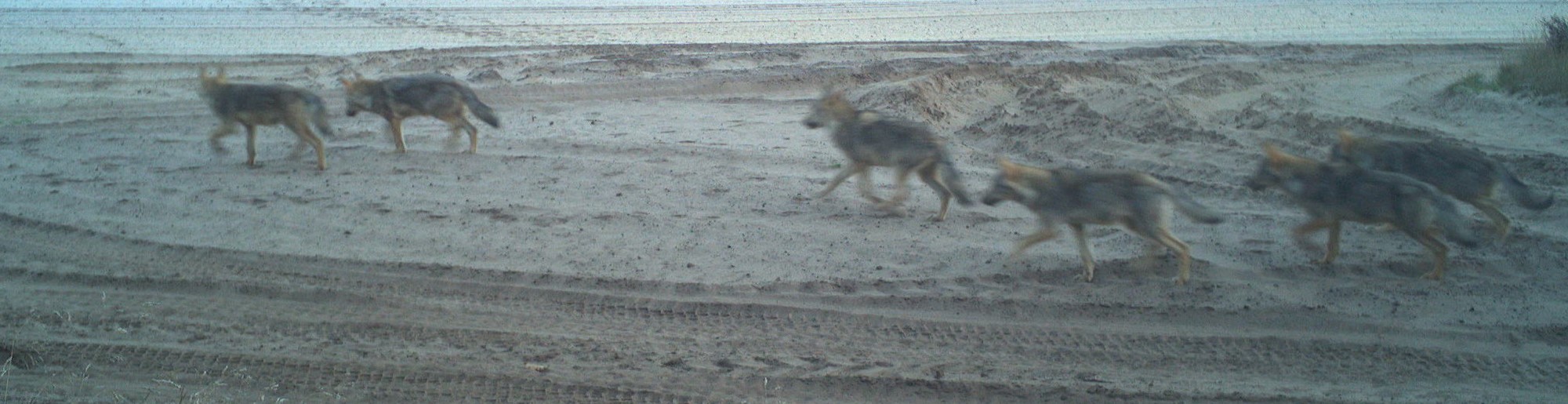
(INBO-ANB)
Details
The return of wolves (Canis lupus) in Belgium represents a significant milestone in European wildlife conservation. As apex predators, wolves play a critical role in maintaining ecosystem balance, with their opportunistic diet shaped by prey availability and vulnerability.However, in Western European landscapes with insufficient wild prey, expanding populations of wolves are seen to target livestock, leading to human-wolf conflicts, including economic losses for farmers, perceived competition with hunters and negative attitudes of the general public towards wolves. In Belgium, fragmented landscapes and high human density exacerbate these tensions. After wolf packs reappeared in the Wallonia and Flanders regions, reports of livestock attacks emerged in both regions7. These emerging conflicts highlight the need to systematically identify areas with high human- wolf conflict potential at a regional scale, allowing for targeted mitigation strategies.
In Belgium, measures to mitigate such conflicts are outlined in regional action plans operating in Wallonia and Flanders. These plans propose strategies such as compensation schemes, fencing, and multidisciplinary approaches to achieve coexistence. These plans are managed by nature associations—INBO, ANB for Flanders, and the Wolf Network for Wallonia (Service Public de Wallonie) —which monitor wolf populations, wolf encounters, and livestock attacks. Despite the availability of extensive data and studies addressing ecological or socio-economic aspects of conflict and mitigation, the effectiveness of these strategies remains partly unexamined. Evaluating their success requires an interdisciplinary approach that includes spatial mapping of conflict-prone areas, media-based perception analysis, and stakeholder perspectives analysis to determine whether current efforts align with public and key stakeholder perspectives as well as ecological realities.
Beyond ecological and socio-economic factors, power imbalances shape perceptions and policies in conservation management. By making power dynamics explicit and emphasising participatory governance, this study aims to provide evidence-based recommendations that prioritise key stakeholder participation in decision-making processes.
Finally, given the recent decision by the Bern Convention to downgrade the wolf's protection status, allowing governments to authorise lethal control where wolf populations are considered excessive, this moment presents a crucial opportunity for such a study. Shifting policies and increasing debates over wolf management may influence stakeholder tensions and public perceptions, making it imperative to assess how policy changes shape attitudes and conflict resolution efforts.
The main research question that this study tries to answer is: How can sustainable coexistence between humans and wolves be achieved? Specifically in a densely populated and agriculturally intensive context such as Belgium. By applying interdisciplinary frameworks, this research aims to advance understanding of human-wolf coexistence and develop actionable, stakeholder-driven strategies for Belgium
The main objectives of the research are to:
1. Identify areas with human- wolf conflict potential at the regional scale.
2. Analyse public perceptions of wolves through a media-based study of traditional and social media, identifying prevailing narratives and comparing them at the regional scale.
3. Characterise stakeholder perspectives on human-wolf interactions, focusing on local communities, conservationists, policymakers, recreationists and hunters.
4. Evaluate the effectiveness of current conflict mitigation strategies based on insights from the previous objectives.
5. Provide evidence-based recommendations that prioritise key stakeholder participation in decision-making processes
| Status | Running |
|---|---|
| Actual start/end date | 01/11/2025 - 02/11/2029 |
Teams
INBO Research theme(s)
- Wildlife management