
PhD Kato Vanpoucke - Improving pollinator habitat modeling by integrating remote sensing data into CNN-based species distribution models
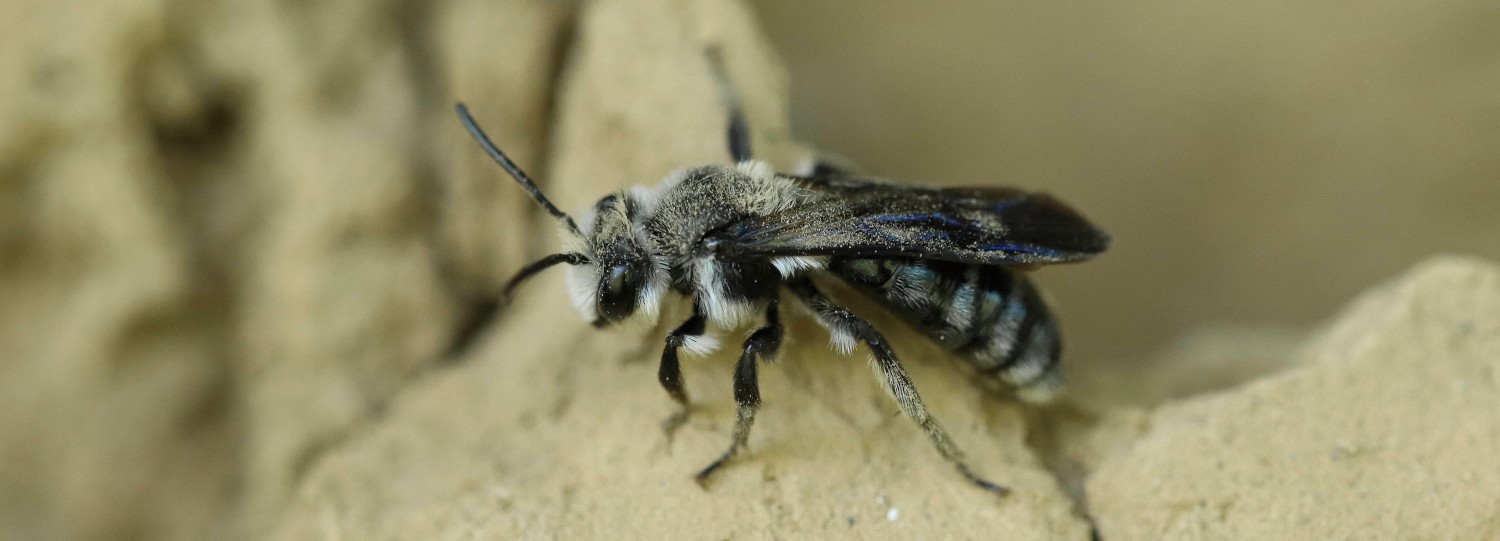
Andrena agilissima, an endangered wild bee species in Flanders (Photo: Kurt Geeraerts)
Details
Pollinators are essential to many wild plant species and crops, providing services that underscore ecosystem health and agricultural productivity. Despite the critical role of wild pollinators, there is substantial loss of pollinator diversity, attributed to multiple threats, including land-use change,climate change and increased pesticide use. Addressing the urgent need for effective conservation practices, Flemish action plan for wild pollinators describes creating more habitats, focusing on measures such as flower strips and other small landscape features. While existing studies provide valuable insights into the effects of landscape composition, configuration and climate change on pollinator communities, the majority of these studies are characterized by their focus on local sites and intensive fieldwork and lack the scalability necessary for widespread conservation planning. Habitat enhancement schemes should be focused on sites where they are most likely to support diverse bee communities, which requires tools that optimize site selection for environment agencies and planning authorities. In this project, we propose the combined use of opportunistic citizen sciend
data, remote sensing data and CNN-SDMs to identify critical environmental factors for pollinator species an to aid effective planning and decision making in biodiversity conservation.
| Status | Running |
|---|---|
| Actual start/end date | 01/11/2024 - 31/10/2028 |
Teams
INBO Research theme(s)
- Agriculture
- Data & infrastructure
Tags
- cnn
- monitoring
- pollination
- speciesdistribution