
Optimizing Dike Vegetation for Erosion Resistance and Biodiversity Conservation in the Scheldt Basin
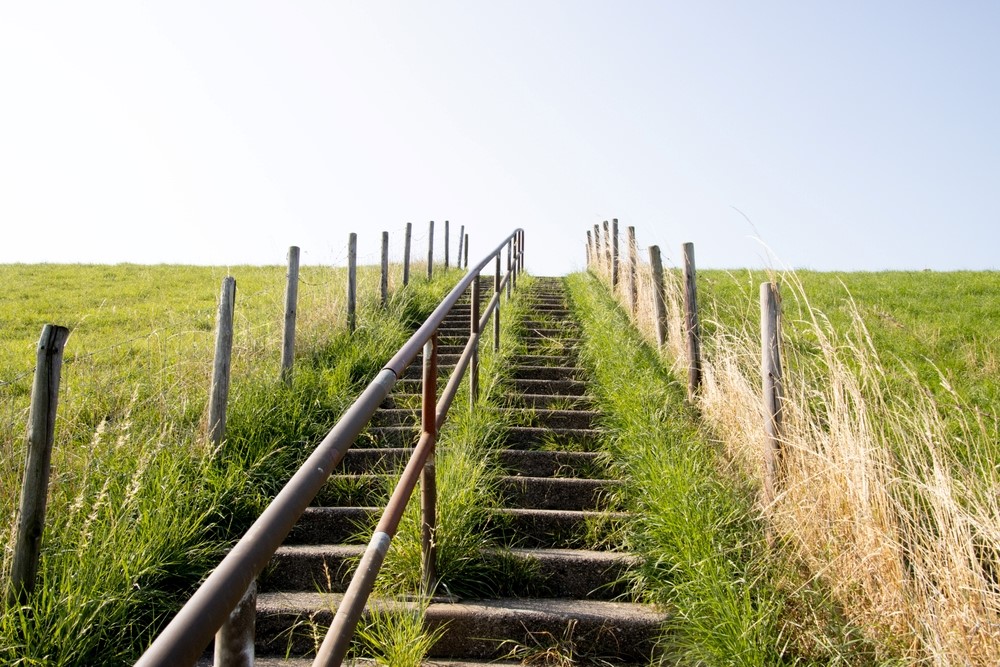
(Shutterstock)
Details
Dike vegetation can serve as a biodiversity hotspot in environmentally degraded regions like Flanders, while also playing a key role in preventing dike breaching by reducing soil erosion caused by wave overtopping. The latter is particularly important in the Scheldt basin, given the rising sea levels and more frequent extreme precipitation events.Dikes are currently sown with few fastgrowing grass species as a dense vegetation cover minimizes erosion by reducing flow velocity and shear stress above-ground, while stabilizing the soil below-ground. However, low-diversity vegetation is expected to deliver suboptimal ecosystem services. Especially a high functional diversity might be important because functional complementarity ensures multiple aspects of soil protection are covered and because it improves resilience to environmental stresses, such as drought, which are becoming more frequent. However, functional diversity, and the conferred ecosystem services, can vary seasonally.
Therefore, focusing on the dikes of the Scheldt basin, this project will
(1) explore the link between plant functional diversity and erosion resistance through time, and between functional and taxonomic diversity;
(2) identify the drivers of plant taxonomic and functional diversity;
(3) assess drought stress impacts on erosion resistance;
(4) use remote sensing for large-scale erosion resistance assessment; and
(5) design seed mixtures to optimize both biodiversity value and erosion resistance.
| Status | Running |
|---|---|
| Actual start/end date | 01/11/2025 - 31/10/2028 |
Teams
INBO Research theme(s)
- Water
- Climate
Tags
- dike
- management
- monitoring
- vegetation
- monitoring