
Guiding restoration by improving ecosystem models
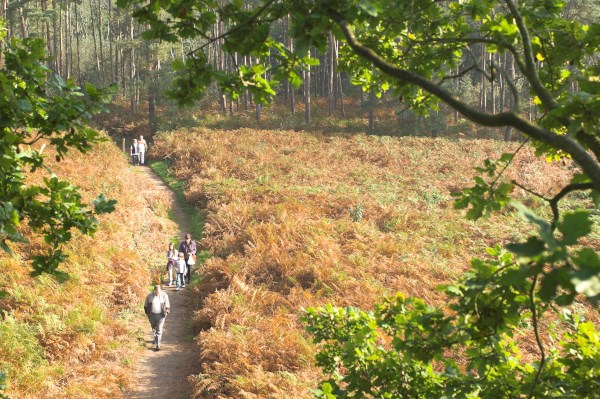
(Yves Adams - Vildaphoto)
Details
The European Union (EU) is dedicated to advancing conservation and restoration efforts in the years ahead, largely through spatially explicit targets. However, ecosystem restoration across the EU faces persistent challenges that could undermine the achievement of EU environmental goals, including biodiversity conservation, climate resilience, and land degradation neutrality. Restoration efforts are often fragmented and are poorly aligned with long-term ecological monitoring and modelling approaches. The recently adopted Nature Restoration Regulation (NRR1) provides a legislative basis, but its implementation faces significant knowledge gaps, lack of advanced dynamic ecosystem models suitable for investigating restoration alternatives, insufficiently harmonised prioritisation systems, and limited stakeholder integration.Current models often fail to capture complex ecosystem dynamics resulting from combinations of restoration and climate mitigation, and practical guidance for restoration is scattered and rarely tailored to local contexts2. RestMod will directly address these gaps by developing an integrated and scalable tool for monitoring, modelling, and assessing restoration actions. The project will bring together leading models of ecosystem processes (e.g., LPJ-GUESS3, G4M4, EPIC5, FLAM6), biodiversity models (e.g., HMSC7), land-use optimisation models (e.g., coupled LLAOS and BeWhere8), existing datasets, empirical data from Open Labs (Section 1.2), remote sensing, and co-creation with stakeholders to guide restoration pathways. Combining these, RestMod will build a robust monitoring, reporting, verification (MRV) framework for biodiversity and ecosystem services (MRV-BES).
Based on the latest reports, RestMod will establish a clear and up-to-date scientific baseline. Focusing on three key terrestrial ecosystems (forests, wetlands, grasslands), RestMod will identify priority habitats, species, and ecosystem services for restoration, in line with the Habitats and Birds Directives, the NRR and other related regulations. For these priorities, the ecological needs and restoration targets will be defined as precisely as possible across multiple scales (Open Labs, regional, and European). RestMod prioritises ecosystems where strong synergies exist between restoration and broader policy objectives, including climate change mitigation, climate change adaptation, land degradation neutrality, and disaster risk prevention. Suitable indicators to monitor and assess their condition will be selected, including indicators aligned with Essential Biodiversity Variables (EBVs) / Essential Ecosystem Service Variables (EESVs). RestMod will provide restoration pathways and trajectories using scenario modelling, enabling the analysis of both short-term (2030) and long-term (2040–50) targets of the EU Biodiversity Strategy 2030 and the NRR. RestMod will address key data gaps by integrating Earth Observation, eDNA, and longterm ecological data into a harmonised MRV-BES system tailored to account for both climate and biodiversity targets.
RestMod will fully embed nature restoration into a policy-relevant modelling approach for climate and landuse planning, using prioritisation to enable coherence between biodiversity and climate goals. This will result in an up-to-date scientific baseline for selected habitats, species and ecosystem services, validated models, data-driven tools for planning and implementing restoration in line with the NRR including co-created practical guidelines for practitioners, policy briefs and recommendations9,10. This will be made available to authorities, decision makers and practitioners through suitable outreach activities.
| Status | Running |
|---|---|
| Actual start/end date | 20/01/2026 - 20/01/2031 |
Teams
- Biotope Diversity
- Forest Ecology and - Management
- Landscape Ecology and Nature Management
- Environment and Climate
- Freshwater Habitats
- InvasionLab
INBO Research theme(s)
- Protected nature
- Climate
Tags
- beetle
- dragonflies
- forests
- grassland
- marsh