
Nature restoration of fen habitat type 3110 under persistent nitrogen and phosphorus pressure and a changing climate (EVINBO)
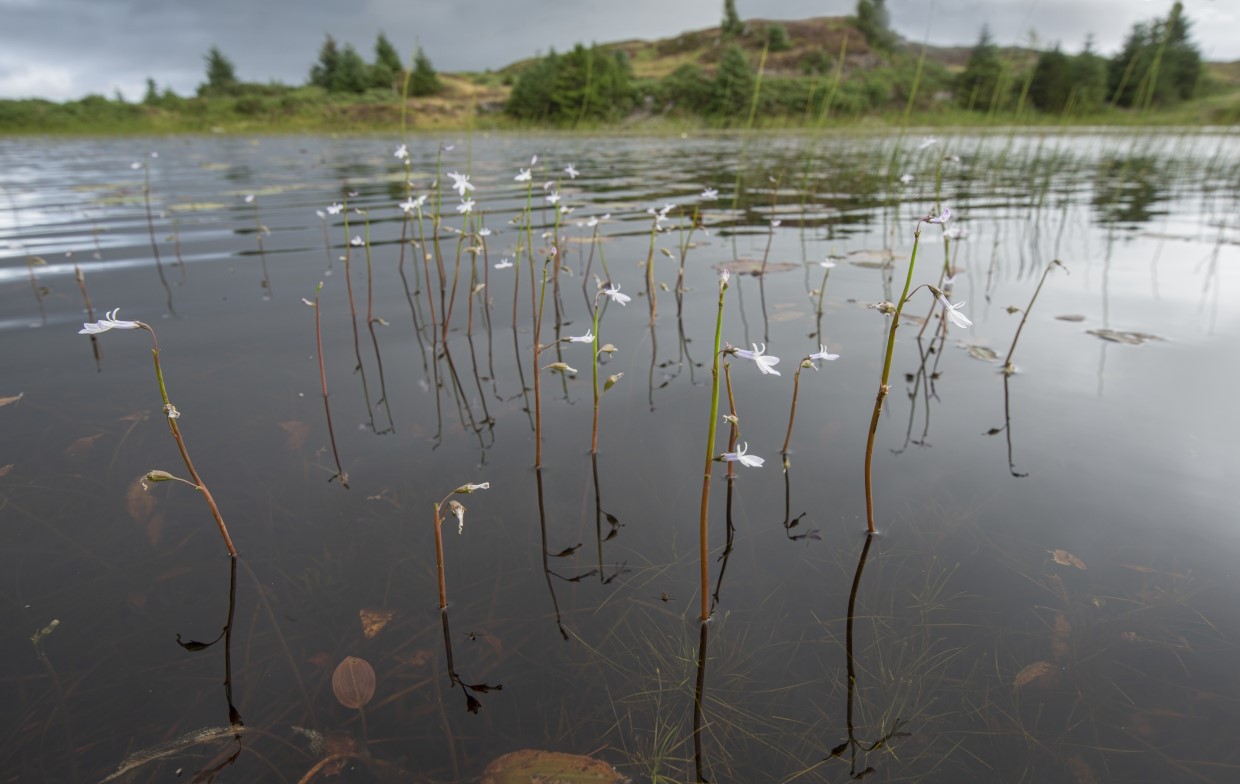
Rollin Verlinde (Vildaphoto)
Details
Habitat type 3110 “Mineral-poor, oligotrophic waters of the Atlantic sand plains with shoreweed communities (Littorelletalia uniflorae)” has the lowest critical deposition value (KDW) of all habitat types in Flanders, at 6 kg N/ha.yr. Of the five PAS customised areas that were established, three have this habitat type as their target.Despite the fact that the habitat type was widespread in Flanders, it now only occurs in five areas (Turnhouts Vennengebied, Kamp Beverlo, Kijkverdriet, De Teut, Heuvelsven). The habitat type is very sensitive to acidification, eutrophication and desiccation. All populations are in an unfavourable state of conservation and must be managed intensively and manually in order to be maintained. In all SBZ areas where the habitat type is targeted, the area must be expanded through the restoration of suitable locations.
Biotical and abiotical data are available for all Flemish locations, enabling the pressures on the fen system to be described. The preconditions for fen restoration in relation to HT_3110 are known.
The remaining knowledge gaps are:
1) the management of the current populations of water lobelia (Lobelia dortmanna), the only indicator species in Flanders of habitat type 3110, in terms of conservation under excessive nitrogen and phosphorus levels and climate change;
2) the genetic quality of the Flemish populations of water lobelia. This should reveal whether there is genetic erosion and whether the restoration of populations can be sustainable from a genetic point of view;
3) and the possibilities for translocating water lobelia to potentially suitable (restored) locations, including atypical, more climate-robust and less eutrophication- and acidification-sensitive water systems.
| Status | Running |
|---|---|
| Actual start/end date | 01/01/2026 - 31/12/2028 |
Teams
INBO Research theme(s)
- Water